Window Problems That May Signal a Failed or Deteriorating Window
Window replacement warning signs include moisture between panes, drafts around closed windows, damaged frames, and windows that no longer operate safely. HomeRemodelBellevue.com checks the window, frame, seal, and surrounding opening to identify the right replacement approach.
Request an Estimate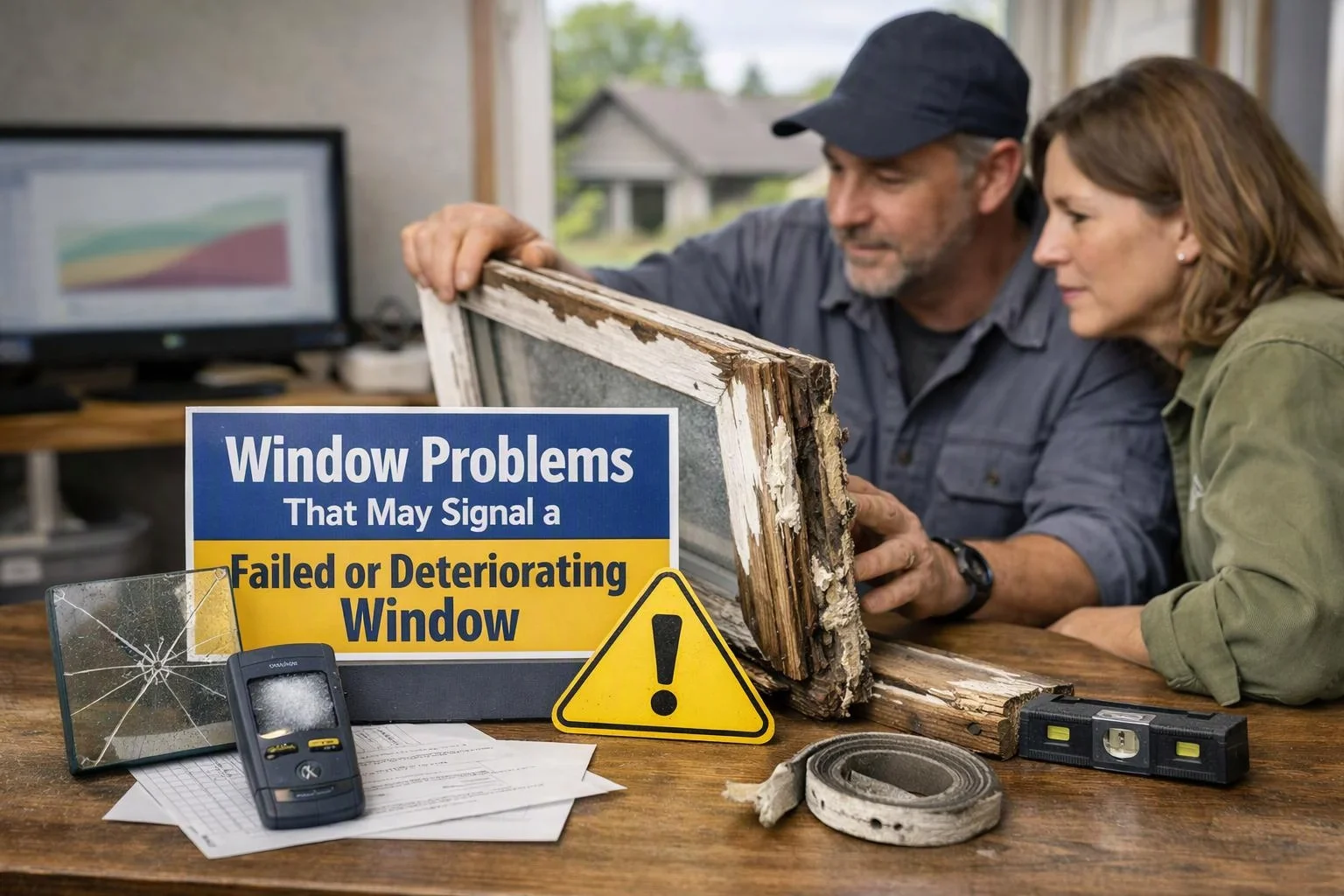
Which Window Problems May Mean Replacement Is Needed?
Window problems may signal replacement when they affect the seal, frame, glass, operation, or safety of the opening.
Some symptoms need a simple repair, such as worn weatherstripping or failed window hardware. Other signs point to deeper window failure, including moisture damage, air leakage, or a deteriorated window frame.
We inspect the full window opening before recommending work. Our team checks how the problem affects home energy loss, water intrusion, indoor comfort, and safe operation. Learn more about our Window Replacement service when the opening needs a broader solution.
Compare the Main Warning Signs
Window replacement warning signs vary by location and severity. The comparison below connects each symptom to its likely cause and the next inspection decision.
| Warning sign | Likely failure point | Possible next step |
|---|---|---|
| Condensation between panes | Window seal or insulated glass unit | Glass replacement or full window assessment |
| Drafts around a closed window | Weatherstripping, sash, seal, or frame | Leak check, repair, or replacement review |
| Warped or discolored frame | Wood rot or moisture damage | Frame and opening inspection |
| Sticking or unsafe operation | Sash, balance hardware, or tracks | Hardware repair or window replacement |
| Water stains or leaks | Flashing, sill, seal, or wall connection | Moisture source and wall damage assessment |
| Window won't lock or close | Lock, latch, sash alignment, or frame | Security and operability review |
Condensation Between Window Panes
Condensation between window panes usually means the seal around an insulated glass unit has failed.
A failed window seal lets moisture enter the space between the panes. The glass may look fogged, and the unit can lose some of its insulating performance.
Glass replacement may solve the problem when the frame remains sound. We assess the sash, frame, and opening before deciding whether glass replacement or full window replacement fits the condition.
Drafts Around a Closed Window
Drafts around closed windows show that air leakage is passing through the sash, seal, weatherstripping, or frame.
Worn weatherstripping can cause a small leak, while frame movement can create a larger gap. Air leaks reduce indoor comfort and may increase energy loss.
We check the window edges and moving parts to locate the leak. Our repair may focus on weatherstripping or hardware, but a deteriorated frame can make window replacement the better scope.
Warped, Soft, or Discolored Window Frames
Warped window frames can signal moisture damage, wood rot, or movement that affects structural support.
Soft wood, dark staining, peeling finishes, and frame warping often point to water that has remained near the opening. A damaged frame can also prevent the sash from sealing correctly.
We trace the moisture source and inspect the frame, sill, and surrounding opening. Minor damage may support a repair, while widespread deterioration may require a replacement window and opening repairs.
Windows That Stick, Jam, or Won't Stay Open
Windows that stick, jam, or won't stay open have an operability problem that may involve the sash, balance hardware, or tracks.
Paint buildup, dirt, frame movement, and worn balances can all affect safe operation. A window that falls closed can create a safety concern, especially near a walkway or occupied room.
We inspect the sash and operating parts before choosing a fix. Hardware work may restore operation, but a damaged frame or repeated failure can support window replacement.
Cracked, Broken, or Permanently Scratched Glass
Broken window glass can reduce safety and may allow air or moisture through the opening.
Glass cracks can come from impact, stress, or movement in the frame. Scratches may affect visibility even when the glass remains intact, and insulated glass damage can affect thermal performance.
We check the glass, sash, frame, and safety glazing needs. Replacement glass may be suitable when the surrounding window is sound, while a damaged sash or frame may require full replacement.
Water Stains or Leaks Around the Window
Water intrusion around a window means moisture is reaching the sill, wall, trim, or interior finish.
Common failure points include window flashing, sealant, the sill, and the connection between the window and wall. Interior water stains may appear below the opening or along nearby trim.
We look for the moisture source before replacing the window. Our scope may include flashing correction, wall repairs, or replacement when the window itself has failed.
Cold Rooms Despite a Closed Window
Cold rooms near a closed window can indicate poor thermal performance, air leakage, or a weak connection between the frame and opening.
Insulated glass, the window frame, and the sash all affect indoor temperature. A cold surface does not always prove window failure, so the surrounding wall and other air leaks also matter.
We use draft detection and visual checks to separate glass, frame, and installation issues. That review helps us choose targeted repair or a replacement scope.
Windows That No Longer Lock or Close Securely
A window that won't lock or close securely can weaken home security and make the opening unsafe.
The cause may be a failed window lock, broken latch, or poor sash alignment. Frame movement can also keep the locking parts from meeting correctly.
We inspect the lock, latch, sash, and frame together. Replacement hardware may solve a localized issue, while a distorted frame may call for window replacement.
Repeated Repairs to the Same Window
Repeated repairs to one window suggest that the underlying failure may be larger than one broken part.
Failed hardware, recurring seal failure, and an old window can create a pattern of ongoing service needs. Each repair may address a symptom without correcting the frame or opening.
We review the repair history and inspect the complete unit. The repair-versus-replacement decision considers the frame, glass, hardware, air leakage, moisture, and replacement scope.
When Should You Stop DIY Checks and Call Us?
Call HomeRemodelBellevue.com when a window problem involves safety, hidden moisture, or structural frame damage.
You can make safe visual checks from the floor, but avoid work that requires unsafe ladder access or handling broken glass. Our crew completes the window replacement assessment and identifies the needed scope.
How We Check Whether a Window Needs Replacement
Our window inspection connects the visible symptom to the glass unit, frame, sash, and opening.
We document the condition before defining the replacement scope. This process helps separate a repairable part from a failing window system.
What Changes the Cost of Replacing a Problem Window?
Window replacement cost changes with the window design, glass and frame choices, opening repairs, access, and installation work. We review those factors before preparing an exact quote.
Window size and style affect the replacement unit and installation steps. A casement window, double-hung window, sliding window, fixed window, or single-hung window may need different work.
Glass type, frame material, and the condition of the window opening also change the replacement scope. Moisture damage, flashing work, trim repair, and difficult installation access can add work beyond the unit itself.
We explain what the quote includes, including the replacement window, preparation, installation, and related opening repairs. You can request an exact quote through our contact page.
Choose the Right Next Step for a Failing Window
Window repair fits a localized issue when the glass, frame, and opening remain sound.
Window replacement makes more sense when several warning signs appear together. Failed seals, frame damage, recurring leaks, unsafe operation, and poor security can point to a deteriorating window system.
HomeRemodelBellevue.com checks the complete window and explains the replacement assessment in clear terms. Contact us to discuss the problem, the opening condition, and the right window replacement service for the work.