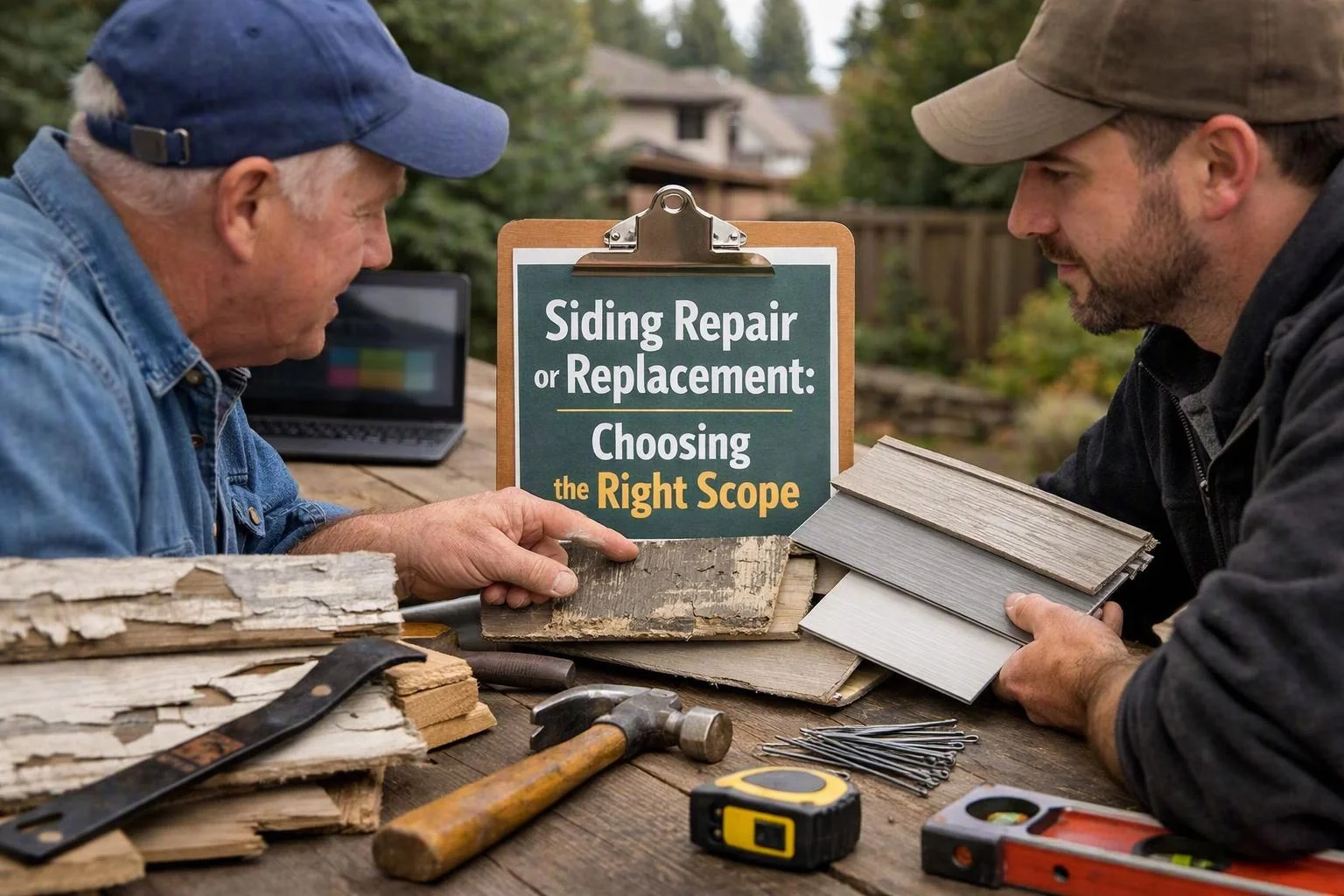
Siding Repair or Replacement: Choosing the Right Scope
Siding repair fits isolated damage when the surrounding siding remains sound. Siding replacement makes more sense when damage is widespread, moisture has reached the wall system, or matching materials isn't practical; HomeRemodelBellevue.com can assess the scope and explain the work.
Request an EstimateSiding Repair vs Replacement at a Glance
Siding repair suits limited damage, while siding replacement suits broader damage or failing siding systems. The right choice depends on the condition behind the visible exterior cladding.
| Factor | Siding Repair | Siding Replacement |
|---|---|---|
| Best-fit condition | Isolated damage with sound surrounding panels | Widespread deterioration or failing materials |
| Cost drivers | Affected area, material match, access, and surface preparation | Material, affected surface area, tear-out, wall repairs, and finish details |
| Project timeline | Usually a smaller scope with fewer affected details | A broader scope that may include wall preparation and coordinated trim work |
| Maintenance | Keeps most existing siding in place | Creates a consistent system with one planned maintenance approach |
- Siding repair is best for small, contained damage.
- Siding replacement is best when the wall system or much of the cladding has failed.
When Siding Repair Is the Right Scope
Siding repair is the right scope when damage is limited and the surrounding siding remains stable and watertight. Cracked siding, loose siding, or small areas of impact damage may not require a full project.
We inspect the affected panels and the nearby wall assembly. Our team checks the wall sheathing, house wrap, flashing, and moisture levels before recommending a repair.
Available matching siding matters. A close material match may work for a concealed area, but a visible repair needs careful color, profile, and texture review.
Advantages of Repairing Siding
Best Fit for Siding Repair
Localized damage is a strong fit for repair when sound surrounding panels protect the wall. The existing material must also be available or reasonably matchable.
We look for a dry wall assembly before closing the repair. If moisture intrusion or rotted wood is present, we expand the scope to address the cause.
When Siding Replacement Is the Better Scope
Siding replacement is the better scope when damage extends across the exterior or the existing siding no longer protects the wall system. Widespread siding damage, repeated water intrusion, and material failure can point to replacement.
Fading, warping, and repeated repairs may also show that the cladding has reached the end of its useful role. We remove affected materials carefully and inspect the exposed wall assembly.
Rotted sheathing or a damaged weather barrier requires more than new siding. Our siding installation process includes the wall details needed for durable protection.
Advantages of Replacing Siding
Best Fit for Siding Replacement
Widespread deterioration is a strong fit for replacement when many areas need attention. Replacement also makes sense when the siding material is obsolete or a poor material match is unavoidable.
Repeated repairs can leave an uneven exterior and unresolved weak points. We review the exposed wall assembly and plan the replacement scope around moisture control.
What We Check Before Recommending Repair or Replacement
A siding inspection shows whether the visible damage is surface-level or connected to the wall system. We use the findings to define a clear project scope.
What Changes the Cost of This Siding Project
The cost of siding work changes with the material, affected area, access, concealed damage, and details around windows and trim. These factors shape the labor and materials included in the replacement quote.
Siding material affects cutting, fastening, surface preparation, and finish work. Labor access, tear-out, disposal, and wall sheathing repairs also change the scope.
House wrap, flashing, trim, window interfaces, and finish details need separate review. We describe each included repair so you can understand what the quote covers.
Our team can prepare an exact written estimate after reviewing the property and the requested scope. A site assessment helps separate visible siding work from concealed wall repairs.
Can Siding and Windows Be Replaced in One Project?
Yes, siding and windows can be planned together when the window edges, flashing, trim, and weather barrier need coordinated work. Combined planning can reduce conflicts between the two scopes.
Window replacement may expose the rough opening and surrounding wall layers. We coordinate the window flashing, house wrap, trim, and siding so the weather barrier remains continuous.
Project sequencing matters because each layer must connect correctly. Our team sets the work order around the rough opening, flashing, siding installation, and final trim.
What a Siding Replacement Quote Should Include
A siding replacement quote should define the full scope of work and identify work that falls outside the base plan. Clear details make the proposal easier to review.
How We Help You Choose the Right Siding Scope
HomeRemodelBellevue.com reviews the visible siding, checks related wall details, and explains whether repair or replacement fits the condition. We connect the findings to a clear project scope and written estimate.
Our team handles siding repair when localized damage can be corrected without disturbing sound areas. When the wall system needs broader work, we plan siding installation around house wrap, flashing, trim, and moisture control.
We also explain material availability, maintenance needs, window interfaces, and building code considerations. You can review our siding repair service when you need help defining the next step.
Contact HomeRemodelBellevue.com to discuss your exterior home remodeling needs and request a project review.
Questions About Choosing Siding Repair or Replacement
How can I tell if damaged siding has caused moisture problems?
HomeRemodelBellevue.com checks for staining, soft wall areas, swelling, rotted wood, and other signs of moisture damage. We also inspect the siding, flashing, house wrap, and wall sheathing to find whether water reached the wall assembly.
Can new siding cover damaged sheathing?
New siding shouldn't cover damaged sheathing because weak or wet material can affect the wall system. We inspect the exposed sheathing, address needed repairs, and prepare the surface before installing new siding.
Does replacing siding include trim and flashing?
Siding replacement can include trim and flashing when those items are part of the agreed scope. We identify window trim, corner posts, starter strip, and flashing work in the replacement quote.
What should I do if my existing siding is no longer available?
When existing siding is no longer available, we review the material match, visible location, and overall condition. A close repair may work for a hidden area, while broader replacement can provide a more consistent exterior.
HomeRemodelBellevue.com can help you choose a siding scope that fits the wall condition and your remodeling goals. Use the contact option to request a review of your siding project.