Why Hidden Problems Need Attention Before Surfaces Are Covered
Hidden remodeling problems should be checked before covering because new drywall or flooring can hide damage and increase later rework.
A remodeling project exposes areas that are usually hard to reach. We inspect wall cavities, ceilings, and floors before installing finish materials.
Concealed damage can spread behind drywall or beneath flooring. Early access lets our crew address the cause while repairs are still easier to plan.
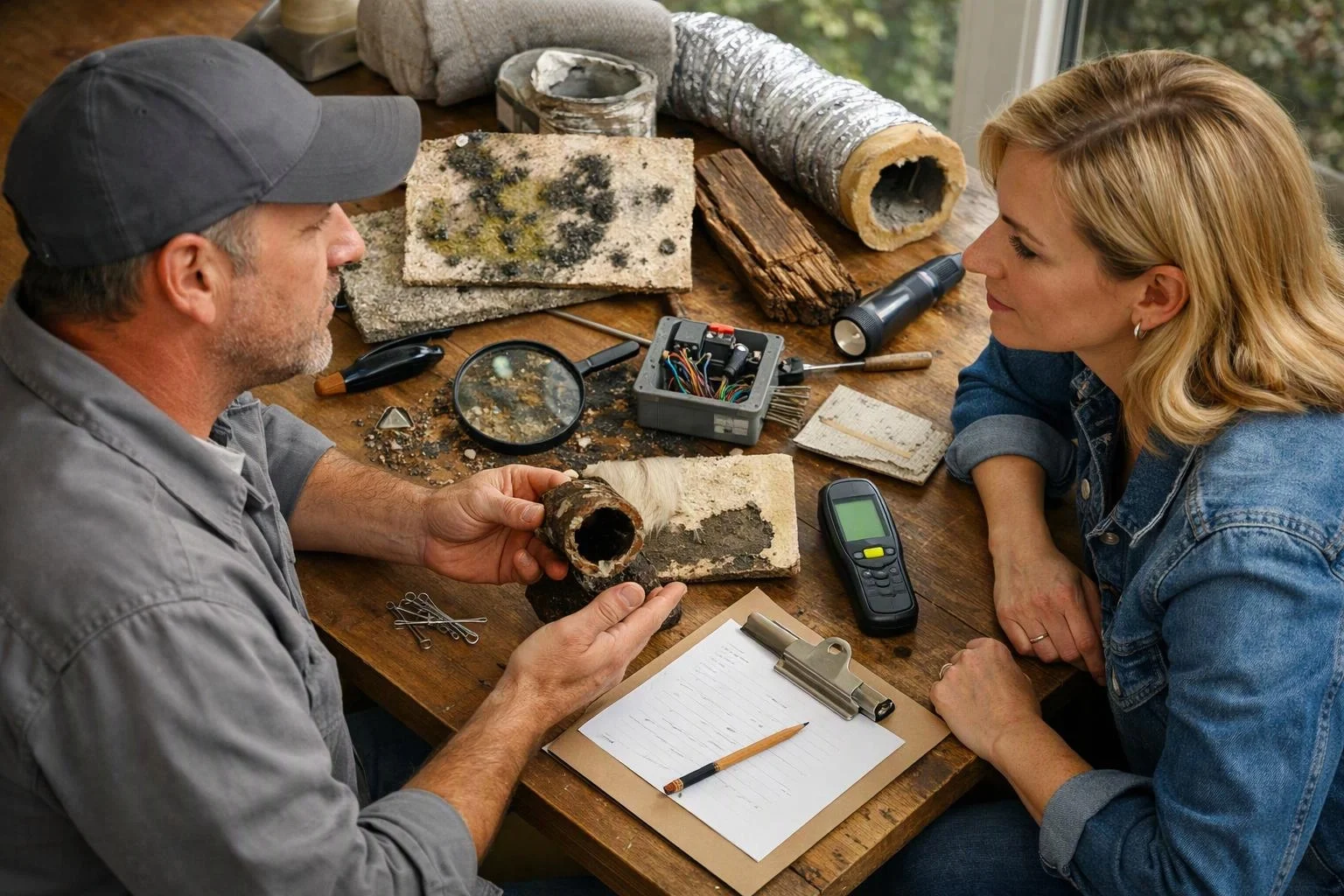
A Quick Reference for Problems Behind Walls and Under Floors
Each concealed issue has warning signs that can change the repair scope. We review the exposed building conditions before finish installation begins.
| Problem | Warning signs | Safe response |
|---|---|---|
| Moisture | Water stains, damp materials, or swelling | Trace and control the moisture source |
| Mold | Mold growth or a musty odor | Remove affected material and correct moisture |
| Pests | Droppings, nests, or damaged insulation | Address entry points and contaminated materials |
| Plumbing leaks | Corrosion, staining, or wet pipe areas | Repair the leak and preserve access |
| Electrical hazards | Damaged wiring, loose boxes, or heat marks | Pause covering and involve licensed electrical work |
| Framing damage | Movement, cracks, or missing blocking | Review the framing before drywall installation |
| Subfloor damage | Soft spots, rot, or uneven areas | Repair and level the base before flooring |
| Insulation problems | Gaps, dampness, pests, or crushed material | Replace damaged material and seal gaps |
Covering Water Damage Before Finding the Leak
Water damage behind a wall usually means the moisture source needs attention first.
Plumbing leaks, roof leaks, and failed seals can leave staining or damp drywall. We trace the likely source before planning drywall repair.
Covering a water stain without controlling moisture can damage new finishes. Our team documents the affected area and includes source repair in the repair scope.
Leaving Mold or Musty Materials Behind New Finishes
Mold and damp materials should be addressed before new finishes close the area.
A musty odor can point to trapped moisture, mold growth, or wet insulation. We inspect the surrounding materials and look for the moisture source.
Our crew removes damaged material when needed and coordinates moisture control before covering the space. This helps protect indoor air quality and limits future rework.
Ignoring Soft, Uneven, or Damaged Flooring
Soft flooring can signal subfloor damage, rot, or weakened floor joists.
Uneven areas may come from movement, moisture, or an unstable base. We inspect the subfloor before floor installation begins.
Our team repairs damaged sections and prepares a stable surface. The repair scope depends on the damage and the materials that must be replaced.
Closing Walls Without Checking Plumbing
Plumbing behind a wall should be checked before drywall closes the pipe runs.
Supply pipes, drain lines, and shutoff valves need proper placement and access. Corrosion or a hidden leak can cause damage after the wall is finished.
We review plumbing access during a bathroom remodel and coordinate required repairs. Our crew can plan an access panel when future service may be needed.
For a broader planning guide, see bathroom remodeler services before closing bathroom walls.
Covering Unsafe or Damaged Electrical Work
Electrical wiring with damage, loose connections, or heat marks needs review before walls are covered.
Junction boxes, outlets, and switches must remain properly placed and accessible. Overheating signs can indicate an unsafe condition.
We pause the covering work and coordinate a licensed electrician for regulated electrical repairs. Our crew resumes finish work after the electrical condition is addressed and verified.
Missing Framing Problems Before Drywall Installation
Wall framing supports drywall and helps keep finished surfaces stable.
Damaged studs, weak joists, missing blocking, or structural movement can cause cracks and uneven finishes. We inspect framing before drywall installation.
Our team records the condition and coordinates the needed repair. The repair scope depends on the location and extent of the framing damage.
Sealing In Pests, Droppings, or Damaged Insulation
Pests can leave droppings, nesting material, and damaged insulation inside wall or ceiling cavities.
Rodents and insects may enter through gaps around pipes, vents, or exterior openings. We document visible damage and identify entry points that affect the remodeling work.
Our crew keeps affected areas accessible while the issue is addressed. We replace damaged insulation when the repair plan requires it.
Installing New Finishes Over a Poor Surface
Surface preparation determines whether new paint, drywall, or flooring bonds and looks even.
Walls, ceilings, and floors may have weak adhesion, uneven areas, or damaged material. We test the surface and correct defects before applying finish material.
Our team levels floors, prepares drywall, and completes paint preparation as needed. Good preparation reduces visible flaws and later rework.
Skipping a Final Check Before the Covering Goes On
Repair verification confirms that exposed problems are addressed before finish installation.
We complete a remodeling inspection, review moisture conditions, and check planned access panels. Photo documentation helps connect hidden conditions with the completed repair.
Our crew closes walls or installs flooring only after the agreed repair scope is ready. This final review helps prevent concealed defects from becoming future rework.
How to Check Exposed Areas Before Covering Them
Exposed areas need a clear review before new walls, ceilings, or floors cover them. We use the findings to build a practical repair plan.
What to Do When Unexpected Damage Is Found
Unexpected remodeling damage should be documented, left accessible, and addressed at its source before new walls or floors cover it.
Pause work around the damaged area and keep the condition visible. We photograph the issue, investigate the source, and update the repair scope.
A concealed issue can change the required materials or finish sequence. Our team explains the change and documents the approved work before continuing.
When to Call HomeRemodelBellevue.com Before Covering a Surface
Call HomeRemodelBellevue.com before covering a surface when the exposed condition could affect safety, durability, or finish quality.
How HomeRemodelBellevue.com Helps Prevent Hidden Rework
HomeRemodelBellevue.com checks exposed surfaces, records hidden conditions, and coordinates repairs before our crew completes drywall or interior painting.
We review moisture, framing, plumbing access, electrical concerns, insulation, and floor preparation as the project exposes them. Our team then matches the repair plan to the finish material.
Our Remodeler team can coordinate drywall installation, drywall repair, surface preparation, and interior painting in the proper order. Contact us to discuss the exposed conditions and request a remodeling estimate.
Talk with our remodeling teamQuestions About Hidden Remodeling Problems
Can new drywall hide water damage?
Yes, new drywall can hide water damage when the leak and moisture source aren't corrected first. HomeRemodelBellevue.com checks staining, damp materials, and nearby plumbing before our crew completes drywall repair.
What does a musty smell mean during a remodel?
A musty smell can signal damp materials, mold growth, or trapped moisture. We inspect the affected area, identify the moisture source, and plan material removal before covering it.
Should soft flooring be repaired before new flooring is installed?
Yes, soft flooring should be checked and repaired before new flooring is installed. We inspect the subfloor, floor joists, and moisture conditions before floor preparation.
Can remodeling uncover problems that weren't visible before demolition?
Yes, remodeling can uncover concealed damage that wasn't visible before demolition. We document the condition, keep the area accessible, and explain the repair scope before new finishes cover it.
Related Resources
How to Choose a Home Remodeling Contractor in Bellevue
What Goes With ItCoordinating Paint, Flooring, Drywall, and Trim During a Remodel
Why It MattersHome Remodeling Benefits: Livability, Satisfaction, and Resale Considerations
Everything About ItBasement Remodeling Options: From Partial Finishes to New Living Space