Deck Problems: When a Repair May Not Be Enough
Deck repair may not be enough when damage affects framing, connections, stairs, or several areas at once. HomeRemodelBellevue.com checks the deck’s structure and recommends repair, partial replacement, or full replacement based on safety and condition.
Request an EstimateHow to Decide Between Deck Repair and Replacement
Deck repair fits isolated damage, while deck replacement fits widespread or structural damage.
Surface damage may only need board replacement or a small railing repair. Damage to the load support, house attachment, or several framing members needs a deeper review.
We inspect the visible parts and the areas that support them. Our team then defines a repair scope, partial replacement scope, or full replacement scope based on structural safety.
Our Deck Repair service starts with that assessment. We look for hidden damage before recommending a deck restoration or rebuild.
Deck Problems That Can Signal Replacement
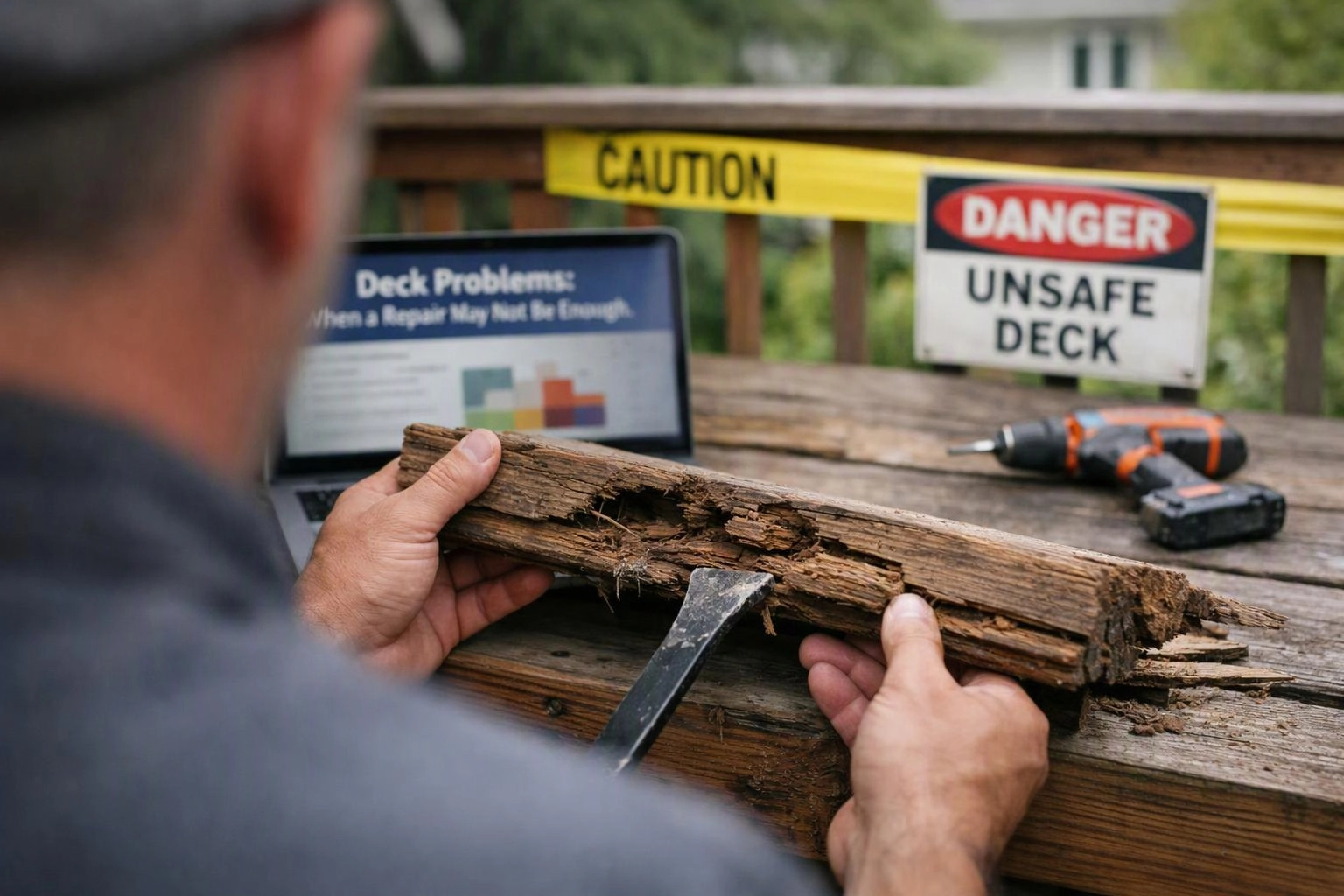
A deck needs closer replacement review when damage reaches several structural parts or keeps returning after repairs.
The table below separates isolated concerns from problems that may affect the whole outdoor living structure. We use the same comparison during a deck assessment.
| Deck part | Repair may fit when | Replacement review is needed when |
|---|---|---|
| Deck boards | Damage stays in a limited area. | Softness and decay cover much of the surface. |
| Joists, posts, and beams | One accessible member needs repair. | Framing damage affects load support. |
| Ledger board | The house attachment remains sound. | Movement or decay affects the attachment. |
| Fasteners and connectors | Connection failure is limited. | Bolts, hangers, or metal connectors fail across the deck. |
| Railing and stairs | A guard post or tread needs a contained repair. | Safety parts move, crack, or lack reliable support. |
Soft or Spongy Deck Boards
Soft deck boards usually show wood rot or moisture damage below the surface.
Water can enter cracks, joints, and unfinished edges. We check the board and the framing below it before recommending board replacement.
Replacement may remain limited when the joists are sound. Widespread softness can point to deeper deck damage and broader replacement planning.
Rotten Joists and Framing
Deck joists and other framing members need replacement review when wood decay affects structural support.
Rot can spread where water collects or where airflow stays poor. Our crew checks the deck framing under the surface and around each support point.
Joist repair may fit isolated damage with good surrounding material. Rotted framing across several areas can make a full deck replacement more practical.
Loose or Failing Deck Connections
Deck fasteners need close review when bolts, hangers, or metal connectors no longer hold firmly.
Movement, corrosion, and moisture can weaken a connection. We inspect connection failure at the boards, framing, posts, beams, and house attachment.
Our repair scope addresses the affected connection and any damaged material around it. Repeated failures can signal wider structural movement.
A Sagging Deck or Ledger Board
A sagging deck can mean movement in the framing, posts, footings, or ledger board.
The ledger board connects the deck to the house, so movement at that point deserves careful attention. We assess the house attachment and load support before planning work.
Limited movement may allow a targeted repair. A failing ledger or widespread shift may require partial replacement or deck reconstruction.
Loose Deck Railings
A deck railing becomes a safety concern when the guard post or railing connections move under normal pressure.
Loose railings can create a fall hazard, even when the deck surface looks sound. We inspect the posts, fasteners, connections, and supporting framing.
Railing repair may fit when the support structure remains strong. Damaged posts or framing can require railing replacement and related structural work.
Cracked or Shifting Deck Stairs
Deck stairs need replacement review when stair stringers, treads, or support points crack or shift.
Stair movement can come from decay, weak connections, or changing support below. We check the stair structure and how it meets the deck and ground.
A contained tread issue may need a small repair. Damaged stringers or unstable support can require stair replacement as part of a larger project.
Widespread Rot Across the Deck
Widespread wood rot affects the deck surface and may also reach the deck framing.
Moisture exposure can damage boards, joists, beams, posts, and stairs over time. We map the affected material before choosing a repair or replacement scope.
Small patches may not solve broad decay. A deck rebuild can provide a more reliable result when sound material is limited.
Repeated Repairs That Don't Hold
Recurring deck damage often points to an underlying cause that temporary repairs haven't addressed.
Water entry, poor drainage, movement, and damaged framing can make the same area fail again. We trace the problem beyond the visible surface.
Replacement planning may make sense when repairs keep shifting the problem to nearby areas. Our team explains which materials and supports belong in the repair scope.
A Deck That No Longer Fits Its Use
A deck may need replacement when its layout, capacity, or access no longer suits the household.
Changing outdoor activities can expose problems with stairs, circulation, seating space, or load support. We review the intended use before planning new deck construction.
A full replacement can address structure and layout together. We can also define a partial project when only one area needs to change.
What Changes the Cost of Repair or Replacement
The job cost changes with the damaged areas, structural work, materials, access, and the amount of removal required.
Deck repair cost drivers include the material condition, hidden damage, and the number of components affected. Replacement scope also depends on demolition, disposal, site access, and the selected deck materials.
Structural framing, ledger work, stairs, railings, and footings can add work beyond the surface. We explain what the quote includes and separate repair work from replacement work.
Contact us for an exact quote after our team reviews the deck. Our assessment helps connect the price to the actual repair scope.
When to Stop Using the Deck and Call HomeRemodelBellevue.com
Stop using the deck and contact HomeRemodelBellevue.com when movement, failed supports, or loose safety parts create an immediate concern.
Keep people away from areas that feel unstable. We can assess the deck and explain whether repair, partial replacement, or full replacement is appropriate.
Do not climb under or dismantle an unstable deck yourself. Our crew handles the structural assessment and creates a safe work plan.
How We Assess Repair or Replacement Needs
Our deck inspection identifies visible damage, hidden risks, and the work needed for structural safety.
We also review applicable code and inspection criteria for the planned deck construction. That review helps keep the project focused on safe support and reliable connections.
Why the Repair Scope Matters More Than the Surface
The repair scope matters because surface damage can hide problems in the deck structure.
New boards cannot correct rotten joists, weak beams, failed fasteners, or a moving ledger board. We inspect below the surface so the planned work addresses the cause.
Material condition also affects the result. Our team matches board replacement, joist repair, railing repair, stair replacement, or full deck replacement to the structure we find.
Plan the Right Next Step for Your Deck
Deck repair fits limited damage, while deck replacement fits structural or widespread problems.
We can plan a targeted repair, partial replacement, or complete deck construction after reviewing the material condition and intended use. The right choice protects structural safety and avoids repeating temporary fixes.
HomeRemodelBellevue.com can assess your deck and provide a clear next step. Contact our team to discuss the repair scope and request a quote.
Get a Free EstimateQuestions About Deck Repair or Replacement
Can a deck with rotten boards still be repaired?
Yes, a deck with rotten boards can often be repaired when the joists and framing remain sound. HomeRemodelBellevue.com checks the boards, supports, and moisture exposure before defining the repair scope.
What does a sagging deck usually mean?
A sagging deck usually means movement in the framing, posts, footings, or ledger board. We assess the house attachment and load support before recommending repair or replacement.
Should I replace deck boards or rebuild the whole deck?
Replace deck boards when damage is limited and the supporting structure is sound. Rebuild the whole deck when rot, movement, or connection failure affects several structural areas.
How can I tell if deck damage has reached the framing?
Deck damage may have reached the framing when boards feel soft, the surface sags, fasteners fail, or railings and stairs move. We inspect below the surface to identify rotted framing and hidden damage.
Related Resources
Deck Repair or Replacement: Comparing the Scope and Quote
Everything About ItDeck Repair or Replacement? How to Assess the Project Scope
Why It MattersHome Remodeling Benefits: Livability, Satisfaction, and Resale Considerations
Everything About ItBellevue Home Remodeling Permits: What to Check Before Starting